Daly City camera status | November 17, 2026
Daly City Red Light Cameras: Discontinued Program, Old Maps and Ticket Checks
Use dated city records to distinguish the former red-light program, historical map pins and an actual traffic case.
Daly City's budget records a discontinued camera program
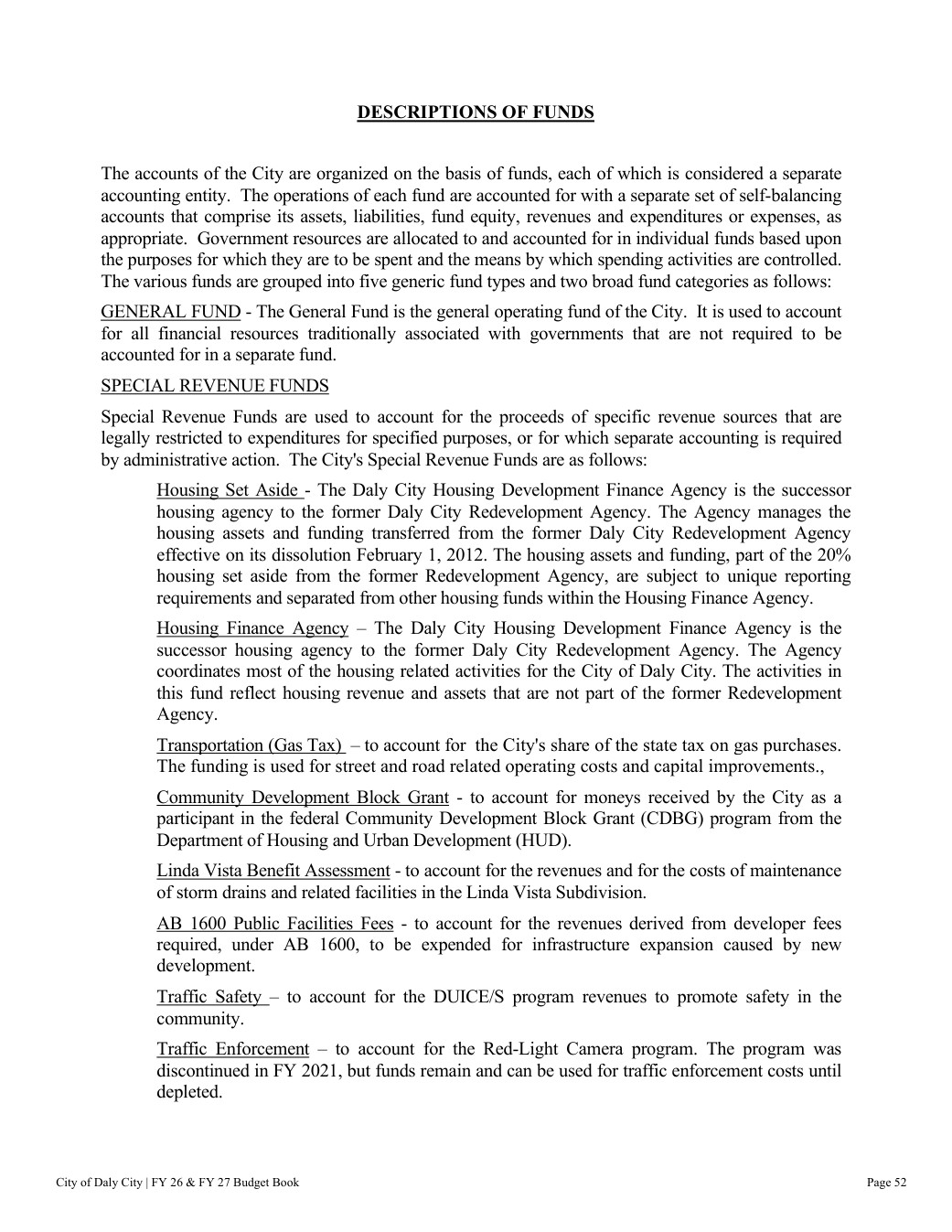
Daly City's own financial records provide the clearest starting point for its red-light-camera status. Page 52 of the official FY2026–2027 budget says the red-light-camera program was discontinued in FY2021. The same entry explains that remaining money can still be used for traffic-enforcement costs. A fund continuing to appear in a current budget therefore does not mean the camera operation continues.
That distinction changes how to read an old intersection marker. A camera icon may preserve a real historical location while giving the wrong impression about present enforcement. The budget establishes a fiscal-year stopping point for the old program; it does not supply an exact shutdown day, explain every contract decision or adjudicate an individual citation. Those are separate questions. This guide uses the city's dated statement rather than labeling historical junctions as active based on an old map.
Why an online FAQ can give the wrong impression
The city's Red Light Cameras FAQ remains online with answers about recorded violations, officer review and a $436 fine. Its wording describes tickets being mailed, which can look like a current operating announcement when read alone. The answers do not establish a new activation date or a current list of enforced approaches. An old operational description and a later budget statement can remain online at the same time.
For a driver, the practical conclusion is narrower than “ignore every traffic ticket.” Treat the old automated program as discontinued on the evidence above, but still identify the agency and allegation on any document you receive. Police enforcement, parking administration and nearby cities' camera programs are distinct. Our San Mateo County camera guide provides regional context; the specific city's dated records should control a local status claim.
Understand the old camera locations and the program timeline
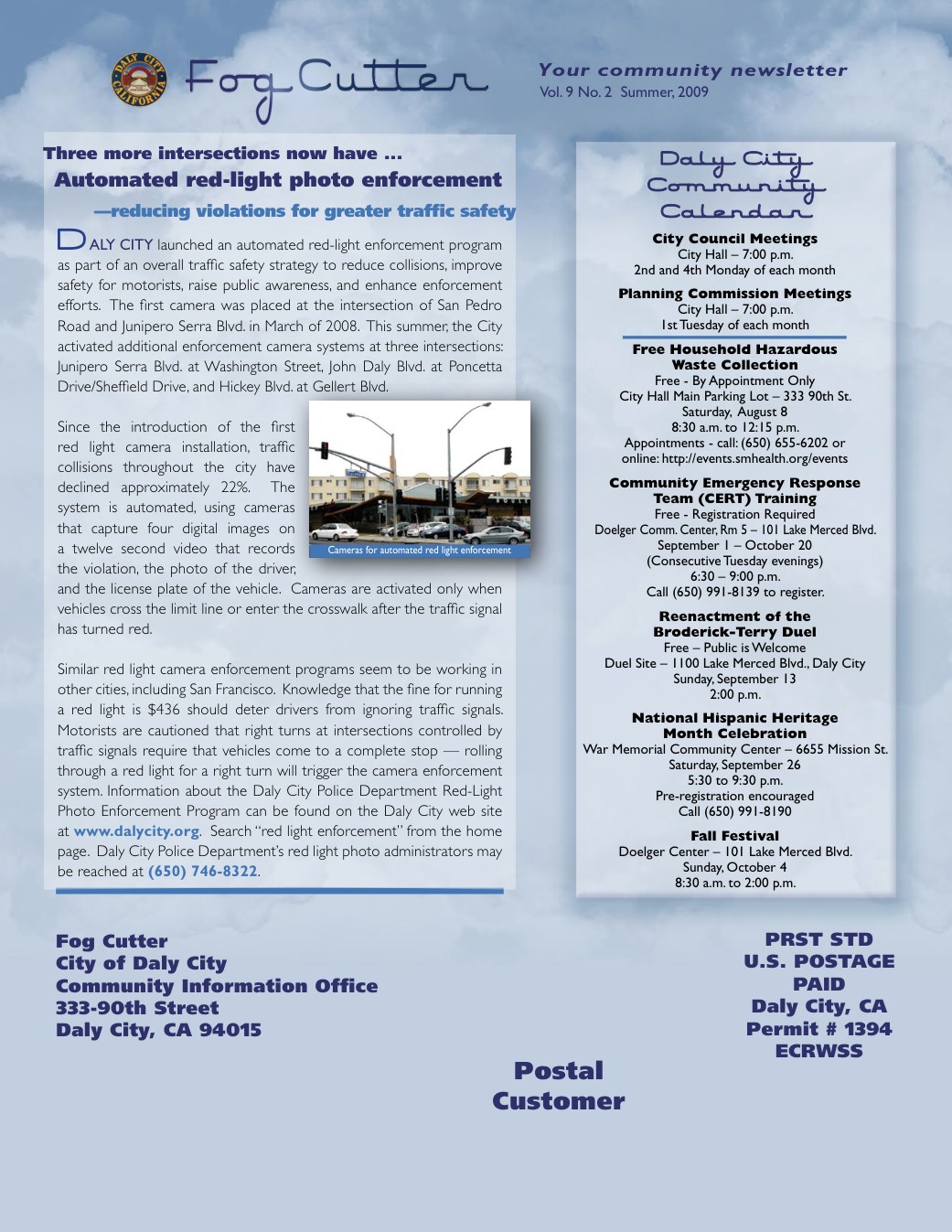
Historical locations are useful for explaining a familiar camera alert, but they need dates. Daly City's Summer 2009 community newsletter described the original installation at San Pedro Road and Junipero Serra Boulevard in March 2008 and three additional junctions by the following summer. That is a record of the program's expansion at that time, not a current operating list.
The city described four junctions in 2009
| Historical junction | What the source establishes |
|---|---|
| San Pedro Road / Junipero Serra Boulevard | First installation described as beginning in March 2008. |
| Junipero Serra Boulevard / Washington Street | Named in the Summer 2009 expansion account. |
| John Daly Boulevard / Poncetta Drive–Sheffield Drive | Named in the same historical account. |
| Hickey Boulevard / Gellert Boulevard | Named in the same historical account. |
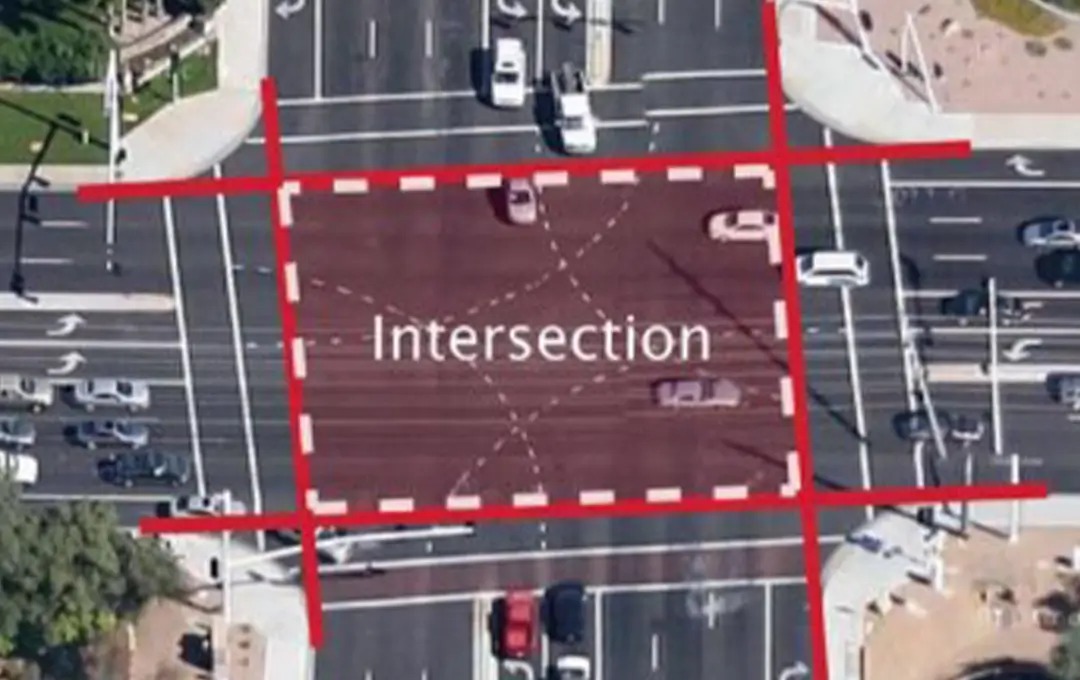
Use that table to recognize an old reference, not to infer a ticketing direction today. A junction name does not identify every approach, lane or turn. If a navigation application warns near one of these crossings, compare the warning's location with the historical source and then ask whether there is current municipal operating evidence. The physical crossroads can be unchanged while the administrative status is different.
The budget identifies the later stopping point
The later financial record identifies FY2021 as the old program's stopping point. Retain the fiscal-year wording instead of converting it into an unsupported exact date. It is also possible for a city to retain funds, equipment or web material after a project ends. None of those leftovers is a substitute for a dated decision or announcement if someone claims that a new program has begun.
A useful historical timeline therefore has at least two separate columns: what was installed and what is known about operation. A 2009 newsletter, a later budget and a present street photograph answer different questions. Keeping them separate prevents an old route alert from turning into an invented 2026 ticket warning. The same method is useful when reading our guide to discontinued red-light programs.
Read a Daly City camera map as evidence, not a live guarantee
A map pin answers where someone placed a marker; it does not explain why the marker remains. Before relying on one, ask four questions: which agency supplied it, when that agency confirmed operation, what the equipment does and which approach is monitored. A point copied from a historical city newsletter may be geographically accurate while its “active” label is wrong. Conversely, a missing pin does not mean traffic rules are unenforced.
City boundaries matter on the Peninsula. Daly City, South San Francisco, Millbrae and the City of San Mateo are not interchangeable labels for one camera authority. County-wide services and travel corridors can cross municipal lines without creating one shared automated-enforcement program. An article about a San Mateo shutdown cannot establish the Daly City shutdown date, and an active camera elsewhere does not prove that the old Daly City program resumed.
Treat navigation alerts as prompts to verify, not as the final legal record. For example, if an application marks Hickey and Gellert, the 2009 newsletter helps explain why that junction appears. The later budget changes how the historical marker should be described. If a second website calls it active without a current municipal source, that is a conflict to resolve rather than an extra independent confirmation. Several pages can simply repeat the same old database.
Our traffic-camera map is a starting point for discovering locations and agency context. Use a current official program page, dated council decision or equivalent operating notice to substantiate a new active claim. For roadside driving, obey the posted signal and signs regardless of the icon displayed on a phone. The map's usefulness is in improving preparation; it cannot tell you that an otherwise unlawful movement is safe because a listed camera is discontinued.
Identify what the equipment at an intersection actually does
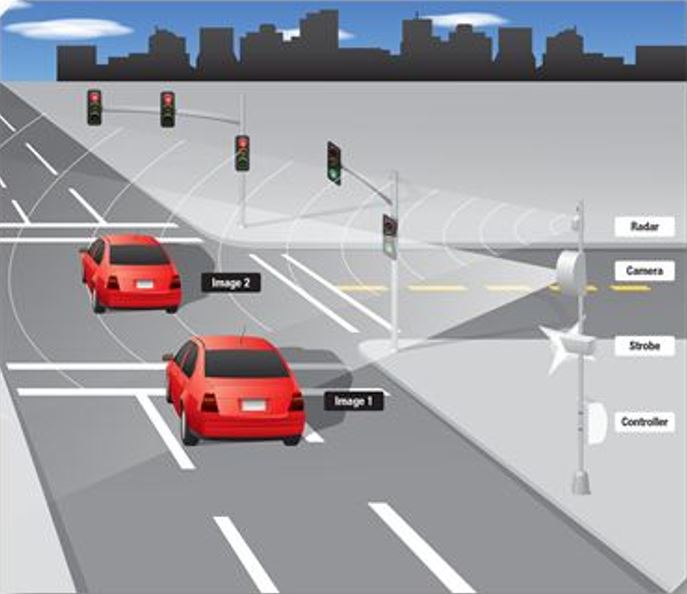
Seeing a camera-shaped housing near a signal is not enough to identify its present task. Equipment can support traffic observation, signal operation, plate recognition or violation evidence. Location and shape are clues, but a ticketing claim also needs an operating agency and a process that connects the recorded event to a citation. That last step is especially important at a place associated with an ended program.
Traffic monitoring and signal detection are different jobs
Caltrans explains in its public FAQ that its freeway CCTV images support traffic management and incident response rather than law enforcement. QuickMap's camera layer provides road-condition images. Those are useful examples of why “traffic camera” does not automatically mean “red-light-ticket camera.” They do not classify every device on a Daly City municipal street.
Signal detection has another purpose: determining demand at an intersection so the controller can manage movement. When trying to identify an unfamiliar installation, ask whether the city describes a traffic-control function or a citation-producing enforcement function. Do not assume that a live freeway image should contain a red-light violation video, or that a small device above a signal has a public viewing portal. The responsible agency can explain its equipment better than an unlabeled street photograph.
A plate reader does not establish a red-light ticket program
Plate recognition and red-light enforcement answer different questions. Daly City Police's ALPR Policy 457 describes uses including identifying stolen vehicles, stolen plates and missing persons. Recognizing a plate is not, by itself, evidence that the vehicle crossed a stop line after the signal changed. An installation described as a plate reader therefore cannot be used to announce that the former red-light program resumed.
If you want to identify equipment, record its location and visible form from a safe public place and consult the city's published information. Do not stop in a travel lane to inspect it or rely on a flash as proof a ticket was issued. Our camera identifier and camera-versus-sensor guide help frame the question while keeping program status separate from appearance.
Check the issuer and court record before responding to a notice
If a document arrives, identify what it actually alleges before making a conclusion from the discontinued program. Read the event date, city, issuing agency, vehicle or driver details, violation section and named response forum. An officer-issued red-light citation is different from a historical camera notice; a parking citation can use a different administrator again. A notice naming Millbrae or San Francisco does not become a Daly City case because you live in Daly City.
Compare the document with the responsible agency's official record. A genuinely new claim purporting to come from the former automated program deserves careful verification, but an internet article cannot dismiss it. Ask the named agency to explain the event, authority and response route. If the paper identifies a court case, confirm that case with the court rather than relying only on a camera vendor's old website or an absent map marker.
Use San Mateo Superior Court for the relevant traffic case
The San Mateo Superior Court Traffic Division links its current services for looking up a case, payment, extensions and traffic-school completion information. Start there for a traffic citation assigned to that court. Use the identifiers requested by its current service, and compare the charge and event date before choosing an action. Do not assume a registration plate is the only information required for every moving-violation case.
If the record is missing, check the ticket number and processing instructions and contact the Traffic Clerk when necessary. Preserve the original due date while the record is being located; a failed web search does not grant an extension. For a scheduled appearance, verify the current calendar and location instead of choosing a courthouse from its proximity to Daly City. The court's own instructions govern that appointment. Our San Mateo County ticket lookup guide explains the county process in more detail without confusing it with a municipal camera map.
Separate a historical fine from the amount on a current citation
The $436 figure on Daly City's old FAQ should be read as part of that historical page, not as a quote for every present red-light allegation. A current case can involve a different violation subsection, assessments, an approved reduction or a different procedural stage. The Traffic Division provides a “How Much Is My Ticket?” route because the case and applicable schedule matter. Check the court's actual record instead of mailing an amount copied from an old camera article.
| Figure or statement | What it can tell you | What it cannot establish |
|---|---|---|
| Old Daly City FAQ amount | What that historical page described. | Today's balance on a particular court case. |
| A state or county schedule | Treatment of a specified violation and category. | That every “red light” document uses the same subsection. |
| The current case record | The court's displayed charge, status and amount. | Whether paying is the best response to a factual dispute. |
Driving-record consequences need the same care. Do not import a statement that camera tickets are always civil and never affect a record from another state into a California traffic-court case. California's court self-help payment guidance explains why a traffic conviction, payment and traffic-school eligibility need consideration. The charge and court disposition determine the relevant treatment, not the fact that a photograph exists somewhere in the paperwork.
If the amount is unaffordable, investigate reduction or payment options before assuming that the only choices are immediate payment in full or doing nothing. If you dispute responsibility, investigate the appropriate contest procedure. Affordability, factual responsibility and traffic-school eligibility are separate questions. Keeping them separate helps you ask the clerk a precise question and avoids accidentally treating a request for more time as a challenge to the allegation.
Choose a response using the actual allegation and deadline
After matching the record, follow the options offered for that specific citation. A person who accepts an allegation may investigate payment or an approved schedule; someone who contests it should read the court's trial instructions before taking an action that resolves the case by payment. A request for information is not necessarily a filed contest. Check how the court will confirm receipt and whether an extension is actually granted.
Gather evidence for the issue you are disputing
State court guidance describes trial by written declaration for eligible traffic infractions. If that route is available in your case, use the required statement and supporting material rather than a general complaint about cameras. A photograph showing the location on another day, for example, may identify a sign but does not necessarily show the signal sequence at the alleged event. Explain what each piece of evidence proves and what it does not.
The discontinued-program record can be relevant when the notice claims current automated enforcement by that same program. It does not automatically answer an officer's observation, a different city's allegation or an older outstanding court matter. Preserve the date and agency details that connect your evidence to the allegation. If a name or vehicle has been misidentified, document that specific discrepancy rather than blending it with an argument about program policy.
Ask about traffic school or inability-to-pay options separately
San Mateo's traffic division publishes routes for reduced fines, financial hardship and traffic school. Those services solve different problems. Traffic school involves eligibility, separate fees and completion requirements; financial-need relief concerns what the court may permit you to pay or how to satisfy an obligation. Neither should be assumed from a successful search result or a generic statement that the old city camera program ended.
Use the court's instructions to make the appropriate request, provide the information it requires and keep its response. If a deadline is approaching while a request is pending, ask what happens to that deadline rather than assuming it is suspended. The goal is a documented decision about the actual case. Our California red-light contest guide gives broader context, while the handling court determines the available procedure.
Use a short verification routine for future Daly City claims
When a new post, map or notice claims Daly City has active red-light cameras, ask for the source date and responsible agency. A dated municipal operating announcement would be different evidence from a copied list or an unchanged FAQ. Record what the source actually establishes: authorization, installation, testing, warnings and ticket issuance are separate stages. A proposal is not an operating program, and the record of an ended program is not a permanent prediction about every future city decision.
- Confirm the exact city, junction and direction rather than relying on a nearby place name.
- Identify whether the source concerns red-light evidence, traffic monitoring, signal equipment or plate recognition.
- Read the date and operational status in a municipal source; retain the fiscal-year label when that is all the record supplies.
- For a real citation, match the issuing agency, allegation, event date and handling court independently of the map.
- Keep the response deadline and proof of any payment, request or court decision in one file.
If two government pages conflict, identify the kind of information each was created to provide. An old public FAQ explains how a former system worked; a later budget can explain why its fund remains after operation ended. Ask the city about the unresolved point rather than treating the number of matching search results as a vote. One repeated database can produce many identical answers without adding any new local evidence.
For Daly City, the useful starting point is the documented discontinued program and a careful distinction between historical locations and current obligations. Keep driving according to the signal and posted restrictions. If paperwork arrives, use the actual agency and court record to choose a response. That combination avoids both common errors: believing an old camera marker proves active ticketing, and believing a discontinued-camera article excuses an unrelated traffic case.



Loading comments...