Chicago | Notices, debt and response options
Chicago Final Determination Ticket: What the Notice Means and What to Do
Identify the stage, verify the amount and separate review deadlines from collection warnings.
A final-determination letter can arrive long after the parking or camera event it concerns. Its meaning depends on the underlying charge, prior response or hearing, and current unpaid record. This guide explains Chicago municipal parking, red-light and automated-speed matters using the official code and public services available on November 17, 2026. Keep the actual documents nearby: the notice heading, dates and ticket number determine which next step needs attention.
What a Chicago final-determination notice means
A Chicago Notice of Final Determination concerns an existing municipal ticket that has reached a later liability and collection stage. It is not another photograph of a new driving event. The city's payment-system definitions describe this notice as involving an unpaid violation and a penalty. Start by identifying the underlying ticket, its event date and the balance, rather than treating the letter's mailing date as the date you allegedly parked or drove improperly.
Municipal Code 9-100-100 provides for the notice after unpaid liability has become final and review procedures have been exhausted or not pursued. It treats the remaining fine and applicable penalty as a debt owed to the city. That makes the document consequential, but it does not mean the letter itself creates a new criminal conviction or an automatic arrest warrant.
Final liability and a later collection notice are related but distinct
The word “final” appears in more than one context. A judge's merits determination can already be final for judicial-review purposes under the hearing provisions. A later Notice of Final Determination tells you about unpaid liability at the collection stage. Waiting for the later letter can therefore be a serious mistake if you wanted to seek review of the earlier decision.
Use the actual chapter and charge. An internet result titled “Notice of final determination” under Chapter 9-105 belongs to Chicago's automated street-sweeper camera program. It should not replace Chapter 9-100 when explaining a general parking, red-light or speed-camera account. Read the heading, ordinance reference and event details together. Our ticket guide helps distinguish notice types; only Chicago can confirm the current status of your individual municipal record.
Reconstruct the earlier notice and hearing stages
Arrange the papers by ticket number and date. A single envelope may concern several violations, while one violation may have produced several letters. Count the underlying tickets, not the number of envelopes. This prevents a reminder and its original ticket from being mistaken for two separate debts.
| Document or stage | Question to resolve |
|---|---|
| Violation notice | What charge and response deadline were stated? |
| Default or failure-to-appear determination | Was a response or scheduled appearance missed? |
| Judge's merits determination | What evidence was considered and what was decided? |
| Final-determination notice | What established amount remains unpaid? |
| Seizure or immobilization notice | What separate vehicle-enforcement action is threatened? |
Initial response periods differ: the code states seven days for an initial parking, standing or compliance notice and 21 days for an automated red-light or speed notice. Later parking-notice instructions need particular care: the direct code describes 14 days for the second notice, while the city's general eHearing FAQ describes a 21-day Notice of Violation interval. Read the deadline on your actual dated notice and request clarification promptly; a generic internet timeline should not replace it.
The mailing provision uses registered-owner address records, including another state's registry where applicable. Compare the address printed on each letter with the address applicable at the time. If you lack an earlier document, ask for it and its status history. An incomplete personal file does not establish that Chicago never issued the document, but it identifies exactly what you need to investigate.
Keep the default, court-review and payment clocks separate
The most damaging shortcut is to read “21 days” somewhere online and apply it to every Chicago letter. A period to petition against a default, a judicial-review deadline and a payment or immobilization warning serve different purposes. Their triggering documents also differ. They are not consecutive extensions that can simply be added together.
For the general final-notice provision, 9-100-100 refers to nonpayment within 14 days of the notice date as potentially leading to immobilization where the separate requirements apply. That is not a new 14-day merits appeal. A seizure notice has another procedure. Keep the notice's heading visible when asking the city which action is currently available.
The default petition has a limited purpose
9-100-090(c) sets a 21-day in-person petition period from issuance of a qualifying default determination. It limits grounds to specified ownership issues, prior payment or good cause for the missed appearance. It separately allows relief when lack of proper service is established, without that ordinary time limit. Neither an old address nor an unopened letter automatically proves the legal exception.
Bring documentation supporting both the procedural request and the underlying defense. The code anticipates being ready for an immediate merits hearing if the petition is granted. Reopening gives access to that consideration; it is not itself a finding that the camera or parking allegation was wrong. Follow the location specified in the determination and obtain instructions if the paperwork is missing.
Court review does not restart with every reminder
Illinois administrative-review law generally requires filing a complaint and issuance of summons within 35 days after service of the decision under review. Determine which decision is reviewable and when it was served with prompt legal assistance. A later balance reminder does not necessarily restart that clock. Calling a payment agent or emailing a disagreement is not the same as starting court review.
Check the account before accepting the stated balance
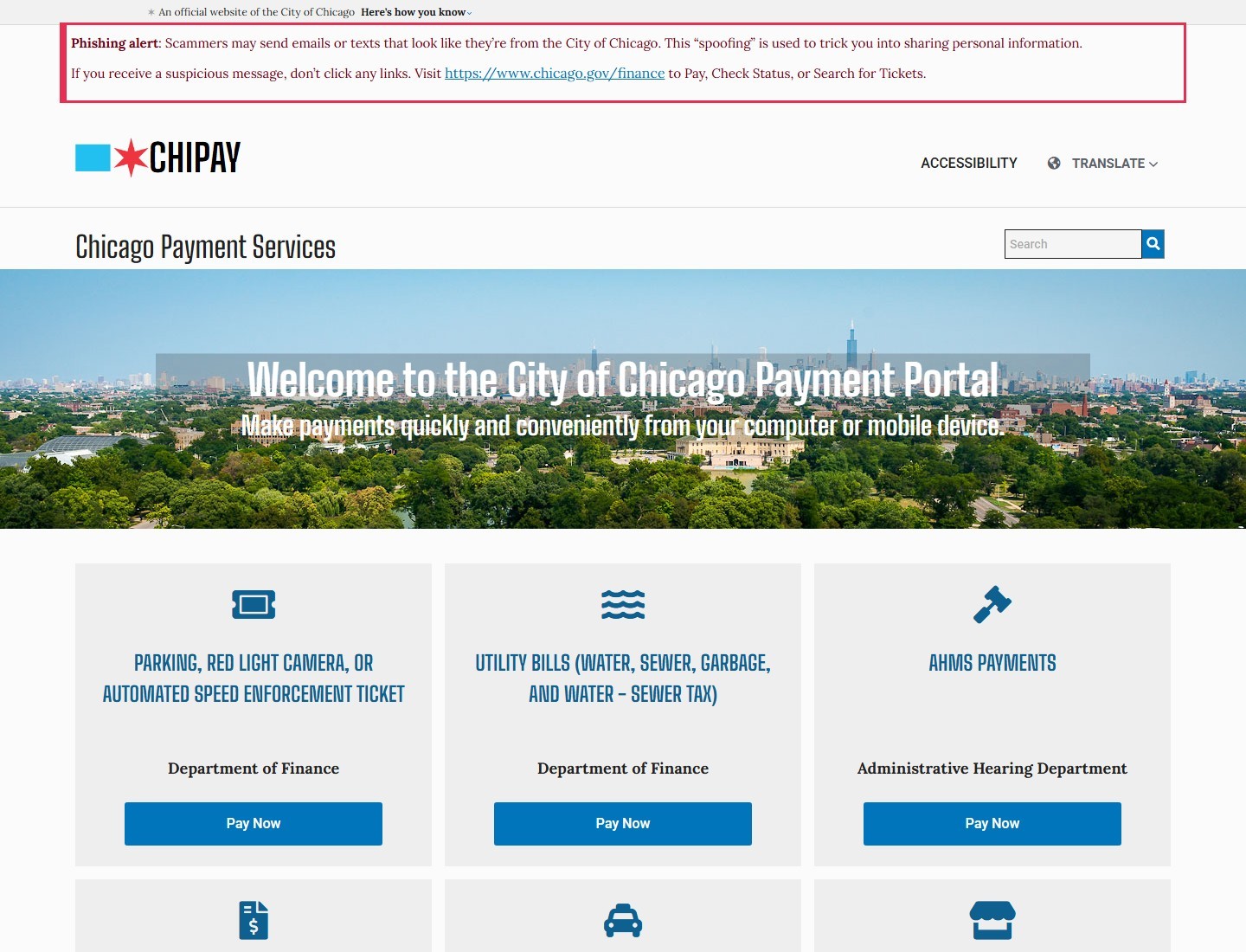
Open Chicago's official vehicle-payment portal and follow its link for finding tickets, hearing status or full payment through ChiPay. On the ChiPay homepage, select the parking, red-light or automated-speed ticket category. The utility-bill and general administrative-hearing payment categories are separate services, even though they belong to the same city.
Compare the underlying ticket number, vehicle details, event date, charge and current status with the paper notice. Then separate the original fine, late penalty, payments or credits, and any listed collection or vehicle fees. A single total cannot show whether a payment went to the wrong ticket or whether a reminder was printed before a transaction posted.
The current late-penalty rule generally uses the lesser of the fine or $250 minus the fine, with specified exceptions. For example, where that ordinary formula applies to a $100 fine, the penalty would be $100, giving a $200 fine-plus-penalty total. This arithmetic example is not a quote for every violation and does not cap separate applicable collection, boot, tow or storage charges. Avoid the outdated shortcut that every fine simply doubles without qualification.
Keep the bank confirmation, city receipt and ticket-specific record together if you already paid. Identify the date, amount and transaction reference when asking for reconciliation. If you won a hearing, provide the written no-liability decision for that exact ticket. Do not pay an unexplained second time solely because an old letter arrived; contact the city promptly while continuing to observe any active notice deadline. Our ticket finder helps locate official issuers, but it cannot reconcile Chicago's private ledger for you.
Understand collection and vehicle-immobilization risk
A final-notice balance is enforceable municipal debt. Vehicle immobilization has additional conditions; one new letter is not a universal rule authorizing an immediate boot. Under 9-100-120, qualifying unpaid matters can trigger the program at three final determinations, or two final determinations more than one year past issuance. Covered violation types can be combined.
Count the actual qualifying determinations and check whether cited payments or decisions have been reflected. The impending-immobilization procedure provides a 21-day response to its notice and limits the documentary challenge to matters such as payment and the qualifying liability records. This is not an unrestricted chance to retry every underlying parking dispute. Keep the seizure notice separate from the final-determination letter when requesting assistance.
A seizure or boot notice needs its own immediate response
If the vehicle is already immobilized, the practical urgency changes. The code provides for towing after 24 hours if the boot has not been released, with a process for requesting additional compliance time. Contact the city immediately about authorized release and any extension. Do not try to drive the vehicle or remove the device yourself.
Additional costs can become significant. The current impound release provision lists a $250 tow fee and $50 daily storage for the ordinary lower-weight category, with higher amounts for vehicles weighing 8,000 pounds or more and specified exceptions. These costs are separate from the original ticket balance. Confirm the vehicle's location, applicable category, amount due and required release documents through official instructions.
A request to question the action and arrangements to release the vehicle are separate practical tasks. Ask what each requires and obtain confirmation of any agreed extension. Do not assume that starting an online form prevents towing. Also verify why the vehicle was impounded: Chicago has other tow authorities unrelated to accumulated camera or parking debt, so this ticket-debt procedure does not explain every impound.
Choose a payment or relief route that fits the current status
If the balance is accurate and no further challenge is being pursued, use the city's current full-payment or installment options. A final determination does not necessarily make a ticket ineligible for every plan. The published table distinguishes early tickets without assessed penalties from qualifying final- or seizure-status tickets considered for Standard or Standard Hardship arrangements.
Ask which debts the proposed plan actually includes. List each ticket and compare it with the enrollment information. If multiple notice numbers or prior accounts are involved, customer service may need to reconcile them. A payment receipt can show only the tickets to which a particular payment was applied; do not use that alone as proof that every outstanding matter is covered.
9-100-160 links protection against immobilization for covered unpaid fines to entering the plan, making its required initial installment and remaining compliant. Starting an application is not the same as meeting those conditions. New tickets, excluded debts or a default can create problems even when an older plan exists. If a vehicle is already booted or towed, confirm the distinct release and down-payment requirements immediately.
The enrollment page also identifies a policy effective January 13, 2026 concerning three defaults on Standard or Hardship plans and subsequent enrollment restrictions. Review your actual history rather than assuming you can restart indefinitely. We explain plan types, eligibility, down payments and relief in the detailed Chicago payment-plan guide; verify the current offered terms before committing.
Relief depends on an applicable program and its conditions. A final notice does not itself grant forgiveness, establish hardship eligibility or erase a penalty. Save the accepted terms, payment schedule and confirmation, then verify that the intended debts and any vehicle-release arrangements are reflected correctly.
Handle an incorrect, missing or suspicious final notice
“Final” does not make an incorrect account entry accurate. It does mean that you should identify the available correction or review route precisely. A mismatched plate, a documented prior payment, a stolen vehicle and disagreement with a judge's reasoning are different issues. Send the relevant proof through the city's instructed process rather than presenting them as interchangeable reasons to ignore a balance.
For parking, standing or compliance notices, 9-100-030 includes withdrawal and vacatur provisions for specified defects and review where the vehicle was reported stolen and unrecovered when the violation occurred. These are defined situations, with qualifications. They do not mean every small typographical error invalidates a ticket or that every late merits argument must be reheard. Provide the exact notice, vehicle records and applicable dated report when requesting review.
If an earlier letter or decision is missing, ask Chicago for a copy and its record history. If you believe service was improper, preserve the envelope, address evidence and chronology, and seek advice about the specific service exception. The companion Chicago ticket-contest guide explains the distinct hearing routes and evidence preparation. Do not send a routine initial contest and assume it has reopened a final matter.
For a suspicious demand, navigate directly through the official city website and call the ticket helpline at 312-744-7275. Chicago warns about phishing messages, and the Circuit Court has separately warned about fraudulent hearing notices demanding QR-code payments. A logo, legal-sounding heading or urgent threat is not sufficient authentication. Compare the supposed debt with the official record without following the message's payment link.
Keep the final outcome in writing: a corrected balance, accepted payment terms, a paid receipt, a vacated determination or the actual review decision. Check that it names the intended ticket. An organized record makes the next conversation specific and gives you a way to verify that the action you took resolved the problem you identified.



Loading comments...